James P. Beckwourth

From Slavery to Crow Chief, Scout, and Witness to History.

A Life Beyond Fiction

“Such men, whose simple tale would pale the imaginative creations of fictionists, sink into obscure graves unnoticed.” — T.D. Bonner

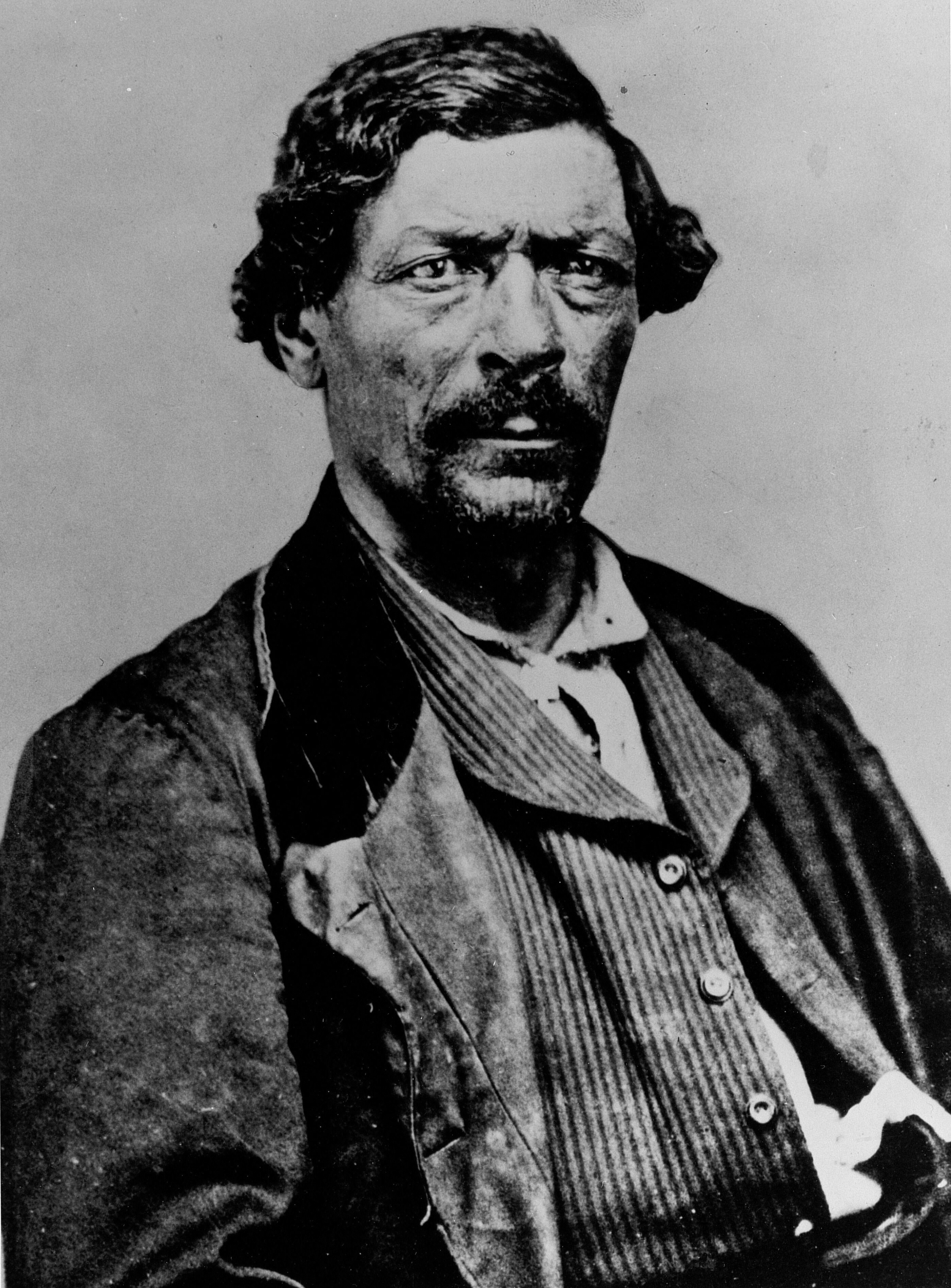
Historical portrait illustration of James Pierson Beckwourth
James P. Beckwourth, dictated his memoirs in 1856

The Man Who Opened the West

Born into slavery, James Pierson Beckwourth forged a life as a legendary mountain man and scout. In 1850, he discovered the lowest pass through the Sierra Nevada, providing a safer route for gold-seekers and pioneers—the gateway that still bears his name.

His story was dictated to T.D. Bonner in 1856, preserving a record of a man who survived scores of years "wetting his intellect in the constant struggle for self-preservation."

Chief Medicine Calf

Adopted by the Crow (Apsáalooke) Nation, Beckwourth rose to become a principal War Chief. For years he led thousands of warriors, defending their lands against the Blackfeet and Cheyennes. Known as Medicine Calf, his legacy among the Crow remains a testament to his unique ability to navigate and lead across vastly different worlds.

Big Horn Mountains, Wyoming—Northern Plains and Crow (Apsáalooke) country
Big Horn Mountains, Wyoming (Crow territory and the region of Beckwourth’s later years)

A Witness to History

From Camp Weld to Congress: the Sand Creek massacre and the inquiries (1864–1867)

Short-grass plains at Sand Creek Massacre National Historic Site, Colorado
Today's short-grass country at Sand Creek Massacre National Historic Site (Kiowa County, Colorado)—near where a peaceful Cheyenne and Arapaho camp was attacked on November 29, 1864.

Truth at Fort Lyon

In September 1864, Cheyenne and Arapaho leaders met U.S. officials at Camp Weld (near Denver). Weeks later, on November 29, 1864, Colonel John M. Chivington's command—mostly men of the Third Colorado Cavalry and attached First Colorado companies, roughly 675 mounted troops—struck a village of Southern Cheyenne and Arapaho people camped on Big Sandy Creek, a tributary of the Arkansas. Chief Black Kettle's band had been directed toward Fort Lyon and flew a U.S. flag and a white peace flag; the assault was widely condemned as a massacre of non-combatants, not a battle of two armies.

James P. Beckwourth served as guide and interpreter on the expedition. In February 1865, a U.S. military commission convened at Denver (presided over by Lieutenant Colonel Samuel F. Tappan) to take sworn testimony about Sand Creek. The printed record spells the witness "James P. Beckwith" —a compositor's variant of his surname. The transcript preserves direct examination, Colonel Chivington's objections and cross-examination, and the board's rulings on what could be entered as evidence.

Congress also acted: the Joint Committee on the Conduct of the War issued a January 1865 report on the "Massacre of Cheyenne Indians," and in February 1867 the Secretary of War transmitted the full Denver and Fort Lyon depositions to the Senate as a printed Senate Executive Document—part of the government's own record of what happened.

Officers who refused the attack—Captain Silas Soule and Lieutenant Joseph Cramer—ordered their men not to fire; Soule was murdered in Denver in April 1865, a killing many contemporaries tied to political reaction to his testimony.
Photograph of Cheyenne and Arapaho leaders and U.S. officials at Camp Weld, September 28, 1864
Before the attack: Cheyenne and Arapaho leaders—including Black Kettle and White Antelope—met Governor John Evans, Major Edward W. Wynkoop, and other officials at Camp Weld, September 28, 1864, roughly two months before Sand Creek. (Denver Public Library, Western History Collection; public domain; Wikimedia Commons.)
Oil portrait of Colonel John M. Chivington by John Antrobus
Colonel John M. Chivington—oil portrait, 1885, by John Antrobus (History Colorado). At the Denver inquiry he was present in the room and cross-examined witnesses including Beckwourth. (Wikimedia Commons; catalogued in the Smithsonian National Portrait Gallery's Catalog of American Portraits.)

Men of the Trail

Portrait of Jim Bridger
Jim Bridger

A companion of the fur trade and fellow scout who mapped the Great Salt Lake.

Portrait of Kit Carson, 1863 (Elbridge Ayer Burbank)
Kit Carson

The famed scout whose paths crossed with Beckwourth frequently during the western expansion.

1822 Rocky Mountain Fur Company newspaper advertisement listing William H. Ashley
William Ashley

Founder of the Rocky Mountain Fur Company and the man who first brought Beckwourth to the Rockies.

Heritage & Trails

Plan a visit to places that preserve Beckwourth's legacy, or explore trails connected to the Emigrant Trail corridor.

Monuments & Sites

Passes, museums, and historic sites across California and Colorado.

Visit guide

Hiking & Trails

Moderate and easy routes near Beckwourth Pass and Portola.

Trail guide

Chronology of a Legend

Born into slavery in Fredericksburg, Virginia.

Joins Ashley’s Rocky Mountain Fur Company expedition.

Adopted by the Crow Nation; begins rise to War Chief.

Discovers the Beckwourth Pass in the Sierra Nevada.

Witness to the Sand Creek Massacre in Colorado Territory.

Testifies at the Tappan Commission inquiry into the massacre.

Dies in the Big Horn valley among the Crow people.